
Experiences in Maremma
A holiday focused on fun and relaxation
LA DIACCIA BOTRONA
The Diaccia Botrona is an area of great historical importance, but above all of great natural significance, thanks to the abundance of wildlife species found there.
Between Castiglione della Pescaia and Grosseto, nestled against the pine forest and the well-known, popular beach, lies the Diaccia Botrona, a marshy area unknown to most people, which for centuries has played a vital role in the history and development of the Maremma region. Read more[...]
Although it is now much smaller than it originally was and surrounded by built-up areas and farmland, it remains a vital part of the complex mosaic of coastal wetlands, which have fortunately been spared from large-scale land reclamation projects.
The ability to store large quantities of water during heavy rainfall, thereby preventing the risk of catastrophic flooding and replenishing the groundwater table, are just some of the vital functions they can perform for the local area.
Above all, however, wetlands are home to an incredible variety of living organisms, both plant and animal. They are veritable ‘gene banks’ which, if properly protected and managed, help to preserve biodiversity.
Read less[...]

SATURNIA
Saturnia stands on a travertine plateau at an altitude of 294 metres, on the left bank of the River Albegna, in the hilly hinterland of the Grosseto Maremma. It is approximately 56 kilometres from Grosseto and 14 kilometres from the municipal capital.
Evidence of human settlement in the Saturnia area dates back to the Bronze Age, with the subsequent emergence and development of Etruscan settlements, as evidenced by the remains of various necropolises dating from the 8th century BC. According to Dionysius of Halicarnassus, the city was founded by the Pelasgians. Read more[...]
Mentioned in a charter issued by Clement III in 1188, the town is recorded as having a castle, a parish church and thermal baths that were already in use. Ruled by the Aldobrandeschi counts – and granted for a brief period to the counts of Tintinnano – it was subsequently contested by Orvieto and Siena, until in 1299 the town was severely damaged by Sienese troops during an attack against Margherita Aldobrandeschi.
Today, Saturnia is a renowned resort in the Maremma, with spa and archaeological tourism as its main attractions.
The Saturnia Archaeological Museum is located in the hamlet, next to the school on Via Italia, and houses archaeological finds from the Etruscan and Roman periods that form part of the Ciacci collection. The museum is part of the provincial museum network, Musei di Maremma. The hamlet also has a library, housed in the building of the old public wash houses dating from 1913. The small library in Saturnia has a collection of around 2,500 volumes.
Read less[...]

L'EREMO DI MALAVALLE
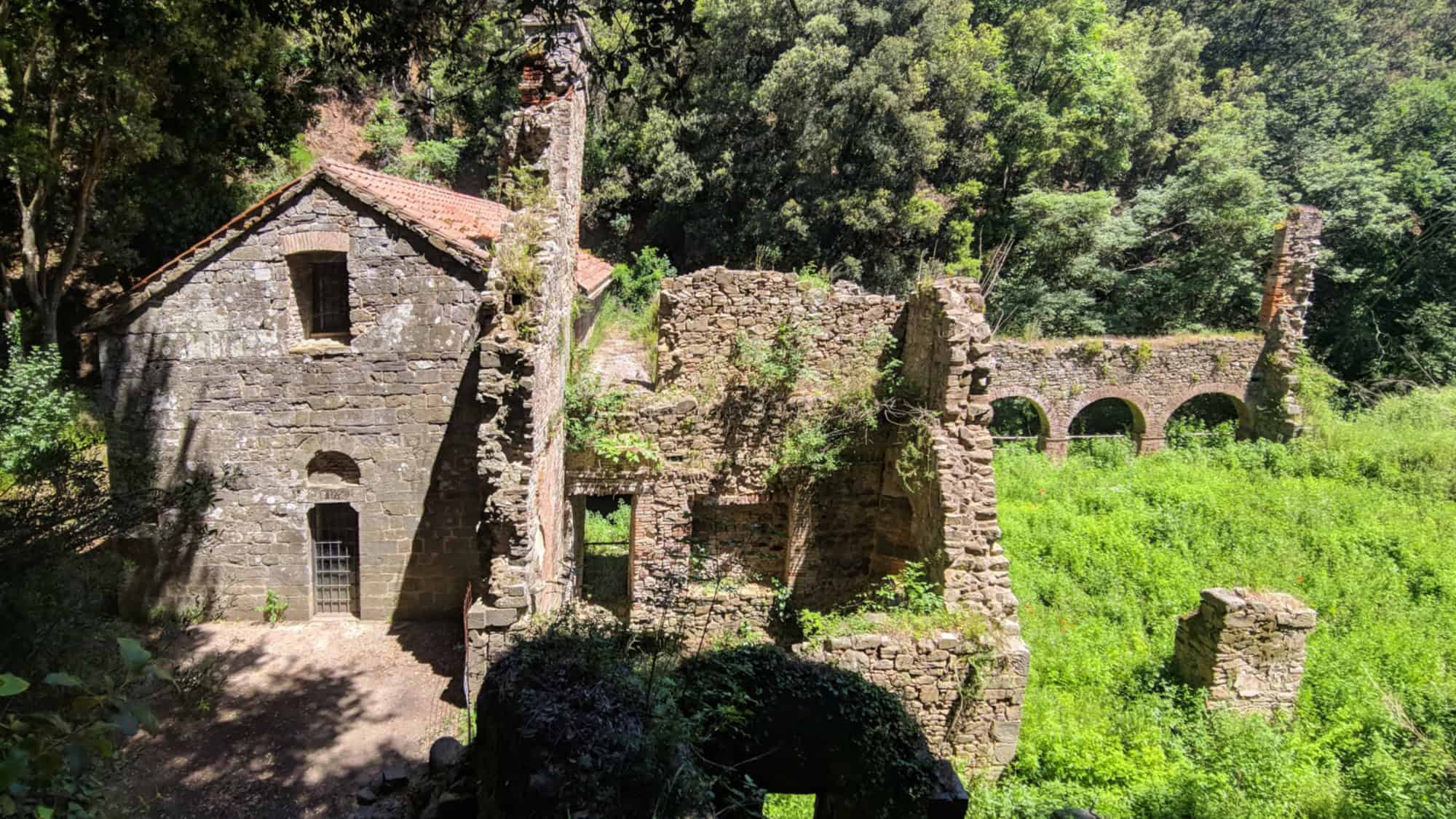
The Malavalle Hermitage was a monastic complex founded by the followers of Saint William of Malavalle. It is situated in the municipality of Castiglione della Pescaia, in the woods to the north-west of the main town, in the area between the centre of Castiglione della Pescaia and the hamlet of Tirli, in the province of Grosseto.
A small chapel was built over the tomb of Saint William of Malavalle, and his followers gathered around this site. Following numerous accounts of miracles performed through the intercession of William, Pope Alexander III granted permission for the veneration of the saint (1174) and approved the Rule of the Williamites (1211). During the 13th century, many hermits came to Malavalle. Read more[...]
The monastery was built between 1230 and 1249 by Pope Gregory IX and became one of the main spiritual centres of the Maremma. In the 13th century, during the war with Siena, the hermitage was destroyed and the saint’s remains were scattered among the neighbouring villages.
In 1564, it was granted to Count Bartolomeo Concini. Father Giovanni Nicolucci (Montecassiano, 1552 – Batignano, 1621), formerly prior of the Augustinian monastery of Montecassiano, retired to a hermit’s life in Malavalle at the end of the sixteenth century and oversaw its restoration. In 1604, the monastery passed to the Augustinians.
The monks lived in the monastery until the second half of the 18th century. The church and monastery, having become private property, were left to fall into ruin.
Read less[...]